Electropolishing Stainless Steel Conveyor Belts
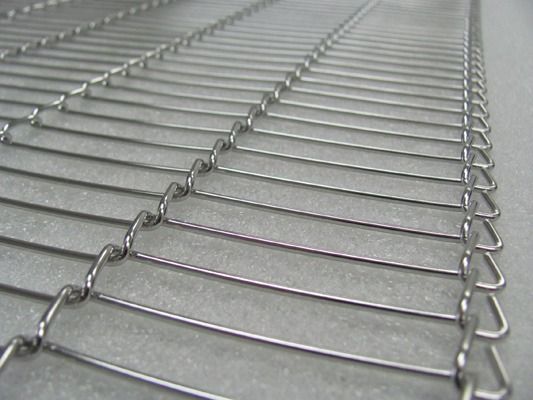
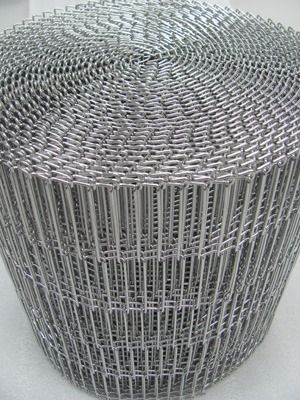
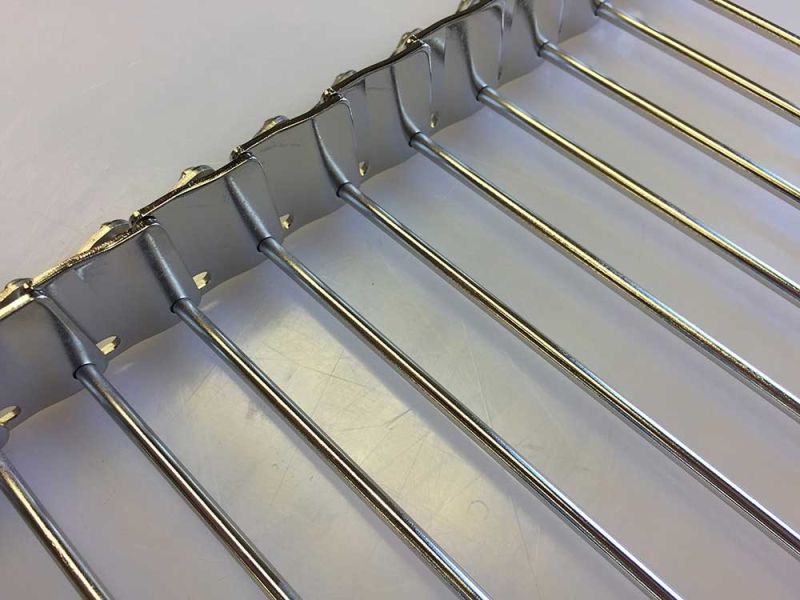
The short answer: A stainless steel conveyor belt is a product-contact surface that is almost impossible to finish conventionally: it is too long for a tank and too flexible to polish mechanically without damage. Harrison developed and built a continuous polishing system that electropolishes stainless belts of varying widths, lengths and designs as they pass through the line, so the entire belt — wires, links, rods and welds — gets the same bright, smooth, passive surface. The result is a belt that resists corrosion, sheds product instead of holding it, and cleans faster.
Why electropolish a conveyor belt
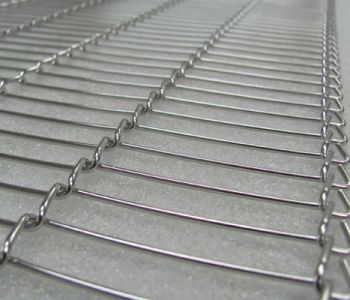
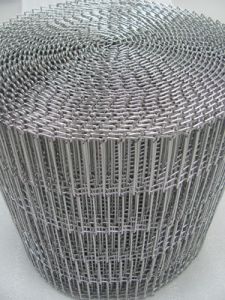
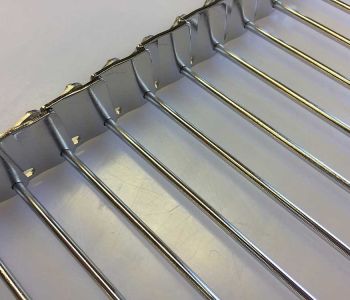
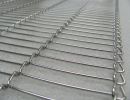
Woven-wire, flat-wire, balanced-weave and plate belts carry food, pharmaceutical product, parts and bulk materials through ovens, freezers, washers and process lines. As fabricated, every wire and weld has embedded iron and a rough, drawn surface where product builds up and corrosion starts. Electropolishing dissolves that outer layer and leaves a chromium-enriched, featureless surface. Product releases instead of caking, washdown takes less time and chemistry, biofilm has fewer places to anchor, and the belt lasts longer in wet, chloride or acidic environments.
How the continuous system works
Instead of immersing the belt in a tank, the belt is fed through a continuous electropolishing line at a controlled rate, with the electrolyte, current density and dwell time set for the belt's alloy and construction. The system handles varying widths, lengths and belt designs and gives the same finish from one end of the belt to the other. After polishing, the belt is neutralized, rinsed, dried and re-spooled for shipment.
What we need to quote
The belt type and construction, alloy, width, length and weight, whether it is new or in service, and your delivery date. Belts in service are inspected on receipt; heavily soiled or corroded belts may be cleaned or pickled before electropolishing.


Request a Quote · Call 800-245-5707
- More to Know
Frequently Asked Questions
Services
Resources
13002 Brittmoore Park Dr
Houston, TX 77041-7231
Phone: 800-245-5707