AL-6XN: Electropolishing, Passivation and Polishing
The short answer: AL-6XN is a 6-percent-molybdenum super-austenitic stainless steel specified where 316L fails — seawater, brine, hot chlorides, bleach and flue-gas service — for its resistance to pitting, crevice corrosion and chloride stress-corrosion cracking. Like every stainless, it loses part of that resistance when fabrication embeds iron and disrupts the passive film. Harrison electropolishes, passivates and mechanically polishes AL-6XN to restore it, certifying mechanical finishes as low as 4 µin Ra and documenting every job. AL-6XN is a registered trademark of ATI (Allegheny Ludlum).
Which process AL-6XN needs
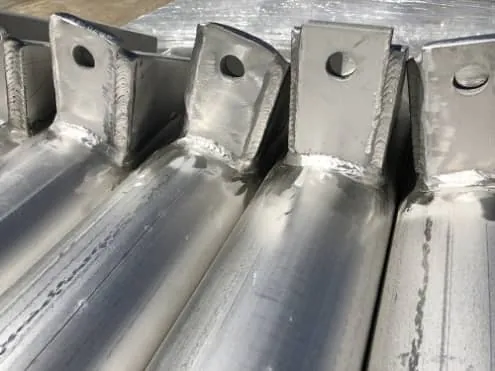
Passivation. The baseline after any fabrication. A chemical oxidant removes free iron and other contaminants without changing the surface, so the alloy resists corrosion as engineered. Harrison passivates AL-6XN components of all sizes to ASTM A967, ASTM A380 or your company specification.
Electropolishing. For surfaces that must also be smooth, cleanable, deburred or bright — pharmaceutical and food equipment, seawater piping interiors, pulp-and-paper bleach-plant hardware. Removes the work-damaged layer, lowers Ra and leaves a chromium-enriched passive surface.
Mechanical polishing. To reach a specified Ra before electropolishing, or where mechanical polishing alone is called for. Harrison certifies finishes as low as 4 µin Ra on AL-6XN.
Typical AL-6XN components
Seawater and brine piping, heat-exchanger tubes and tubesheets, pulp-and-paper bleach-plant equipment, flue-gas desulfurization components, offshore and marine hardware, pharmaceutical and food process equipment, and chemical-process vessels. Large fabrications are handled in Houston with four overhead cranes and 15,000 lb material-handling capacity; installed equipment is passivated on-site.
See stainless steel electropolishing for the process and passivation for chemical passivation in detail.
Request a Quote · Call 800-245-5707
- More to Know
Frequently Asked Questions

Services
Resources
13002 Brittmoore Park Dr
Houston, TX 77041-7231
Phone: 800-245-5707