
Polishing and Electropolishing for Pulp and Paper Equipment
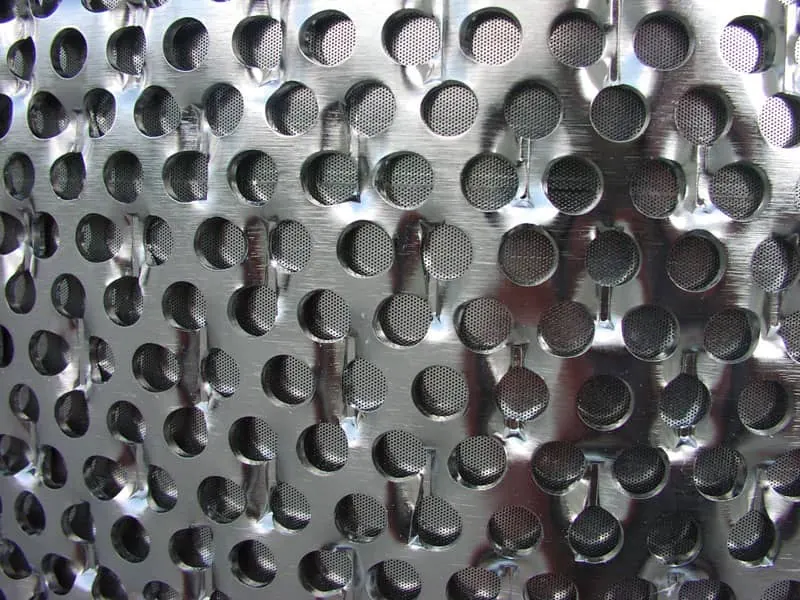
The short answer: Fiber finds every rough edge. Milled and drilled screen baskets, wedge-wire screens and headbox components with as-machined surfaces collect fiber, form stringers and plug. Harrison electropolishes and mechanically polishes those components to an ultra-smooth, corrosion-resistant finish — including the "cotton ball" finish mills ask for on screening surfaces — so fiber passes instead of building up. We also repair and refinish worn screening equipment.
Components we finish
Screen baskets and cylinders. Milled, drilled and slotted baskets electropolished to smooth every hole and slot edge, which is where fiber catches first.
Wedge-wire screens and strainers. Electropolished for a smooth, burr-free profile and improved corrosion resistance in hot, chemically aggressive stock.
Headbox, approach-flow and stock-prep components. Mechanical polishing and electropolishing of plates, slices, pipes and manifolds to reduce fiber adhesion and streaking.
Repair and refinishing of worn equipment. Mechanical polishing to restore the surface, followed by electropolishing to a uniform finish.
Why electropolishing works on screening equipment
Electropolishing dissolves metal preferentially from peaks, burrs and sharp edges, so it does something mechanical polishing cannot: it rounds and smooths the inside of every hole and slot in a screen basket at the same time. The result is a surface with far fewer sites for fiber to anchor, less stringer formation, better corrosion resistance in bleach and black-liquor environments, and a longer interval between cleanings. The "cotton ball" finish — smooth enough that cotton drawn across it leaves no fibers — is the practical test mills use, and it is what we deliver.
Capacity and turnaround
The Houston facility has four overhead cranes and 15,000 lb material-handling capacity for large baskets and headbox sections. Harrison has polished pulp and paper equipment since 1980 and is ISO 9001 and ISO 14001 certified. Expedited service is available for outage windows; lead times vary with shop load.
Representative project
A Gulf Coast mill was losing screening capacity to fiber buildup and stringers in a set of drilled stainless screen baskets. Harrison mechanically polished the worn screening surfaces and electropolished the baskets whole, smoothing every hole edge to a cotton-ball finish, and returned them before the mill's scheduled outage with certificates of conformance. Plugging dropped and the baskets ran longer between cleanings.
Request a pulp and paper quote
Tell us the component, the alloy, the dimensions, the finish you need, and your outage dates. We quote within one business day.
Request a Quote · Call 800-245-5707
- More to Know
Frequently Asked Questions

Services
Resources
13002 Brittmoore Park Dr
Houston, TX 77041-7231
Phone: 800-245-5707