Stainless Steel Mechanical Polishing
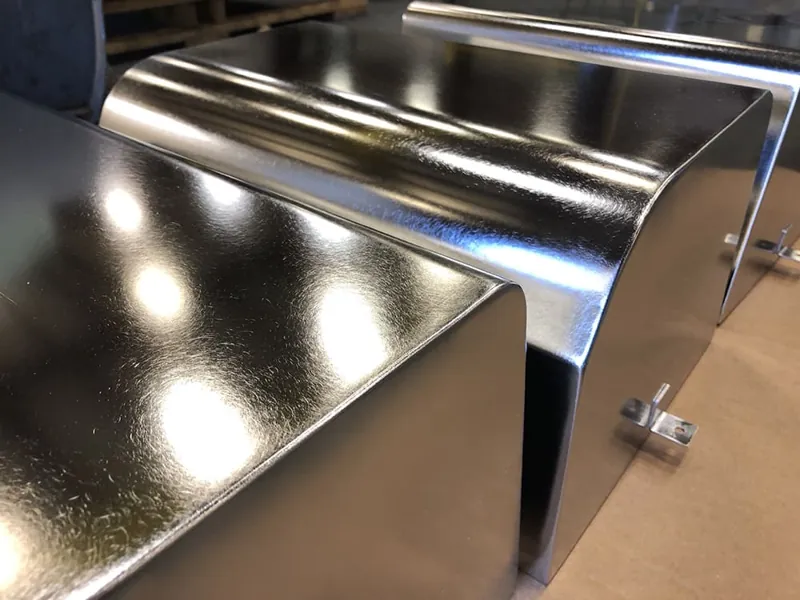
The short answer: Stainless steel is polished for the same reasons it is chosen: it has to perform in harsh, hygienic or visible service, and the finish is part of that performance. Harrison mechanically polishes 304, 316/316L, duplex and 17-4 PH stainless to #4 brushed, #8 mirror and Ra-specified finishes, including ASME BPE SF1, SF2 and SF3 for bioprocess equipment, and certifies finishes as low as 4 µin Ra with profilometer readings. Where the drawing calls for SF4–SF6, a UHP semiconductor finish or the lowest possible adhesion, the mechanically polished surface is then electropolished.
Finishes on stainless steel
#4 brushed. Directional satin finish from 120–150 grit; architectural, food-equipment and general process surfaces.
#8 mirror. Successively finer abrasives and buffing; reflective surfaces and the lowest mechanical Ra.
Ra-specified. Polished to the maximum Ra on the drawing and verified with a profilometer; certified as low as 4 µin Ra.
ASME BPE SF1, SF2, SF3. Mechanically polished product-contact finishes at 20, 25 and 30 µin Ra max. SF4–SF6 (15, 20 and 25 µin) add electropolishing; see ASME BPE specifications.
Deburring and restoration. Removal of burrs, tool marks and weld texture, and restoration of scratched, worn or corroded surfaces before re-finishing.
Mechanical polishing and the passive layer
Mechanical polishing changes texture, not chemistry. Abrasives can embed iron and leave a smeared, stressed layer that reduces corrosion resistance, which is why polished stainless going into corrosive or hygienic service is passivated afterward, or electropolished, which removes that layer and passivates in one step. Harrison will tell you which your part needs when you send the drawing and the service conditions.
Specifications
ASME BPE (surface-finish designations), NiDI No. 9012 (stainless steel mechanical finishes), ASME B46.1 (surface texture and Ra measurement), and ASTM A967 / A380 where passivation follows. Finish-specified work ships with Ra readings and a certificate of conformance.
Typical work
Process vessels and tank interiors, hoppers, chutes and conveyor screws, hygienic tubing and fittings, pump and valve components, architectural and marine hardware, and equipment restoration. Large equipment is handled in Houston with four overhead cranes and 15,000 lb material-handling capacity; installed vessels and equipment are polished on-site across the Houston area and the Gulf Coast.
Request a Quote · Call 800-245-5707
- More to Know
Frequently Asked Questions

Services
Resources
13002 Brittmoore Park Dr
Houston, TX 77041-7231
Phone: 800-245-5707