Electropolishing and Passivation for Marine and Boat Components
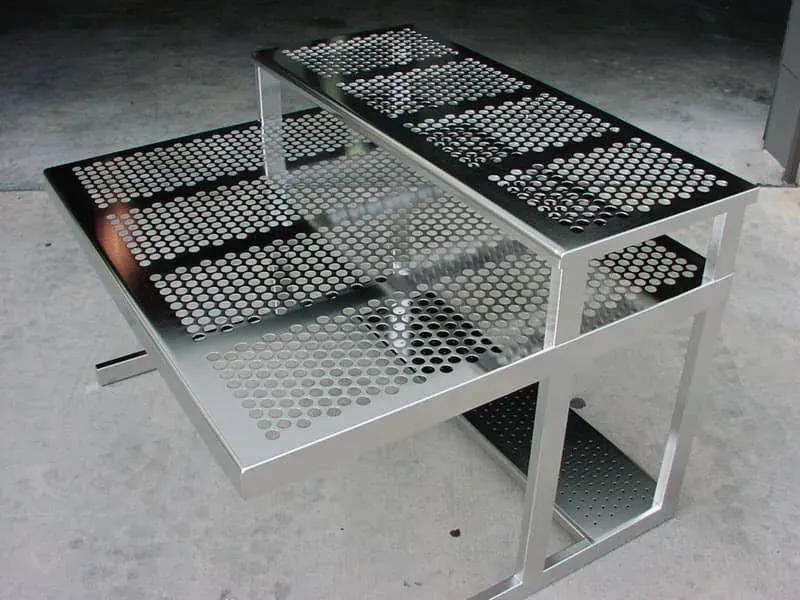
The short answer: Salt air and seawater find every weld, scratch and bit of embedded iron on stainless marine hardware and turn it into tea staining, rust streaks and pitting. Electropolishing removes that damaged surface layer and leaves a chromium-rich, mirror-bright finish that resists corrosion far longer than a buffed or as-welded part. Harrison electropolishes and passivates new and used marine stainless — rail assemblies, davits, anchors, ladders, boxes and custom hardware — and restores corroded components to their original brilliance.
Components we finish
Welded rail and handrail assemblies. Complete assemblies electropolished after welding so the heat-affected zones are as corrosion-resistant as the tube.
Davits, cranes and anchor hardware. Davits, anchors, anchor guides and rollers electropolished for corrosion resistance and appearance.
Ladders, boxes, cleats and deck hardware. Batch electropolishing with the same mirror finish across the set.
Restoration of used and corroded parts. Pickling and electropolishing remove rust, tea staining and pitting from stainless hardware in service and return it to a bright, passive condition.
Why electropolished marine stainless lasts longer
Mechanical buffing hides surface defects under smeared metal and leaves embedded iron from the abrasives; the first season at sea brings it back as rust streaks. Electropolishing dissolves the outer layer of metal, removes embedded iron and the damage from welding and grinding, and leaves a surface enriched in chromium. The result is a passive, mirror-bright finish with far fewer sites for chloride pitting to start. Electropolished parts are passive as finished; parts that are only passivated per ASTM A967 gain the corrosion resistance without the bright finish. See does electropolishing improve corrosion resistance.
Capacity
The Houston facility has four overhead cranes and 15,000 lb material-handling capacity, so complete rail assemblies and davit structures are processed without cutting them apart. Harrison has electropolished marine stainless for boat builders and boat owners since 1980 and is ISO 9001 and ISO 14001 certified.
Representative project
A Gulf Coast boat builder delivering a custom sportfishing yacht needed the complete welded 316 rail assemblies, tuna tower and anchor hardware electropolished to a uniform mirror finish before installation. Harrison electropolished the assemblies whole, finished the hardware in a matching batch, and returned the set on the builder's installation schedule. The finish matched across every component and the heat-affected zones at the welds were as bright and corrosion-resistant as the tube.
Request a marine quote
Tell us the components, the alloy, the dimensions of the largest assembly, whether the parts are new or in service, and your delivery date. We quote within one business day; expedited service is available and lead times vary with shop load.
Request a Quote · Call 800-245-5707
- More to Know
Frequently Asked Questions

Services
Resources
13002 Brittmoore Park Dr
Houston, TX 77041-7231
Phone: 800-245-5707