Aluminum Mechanical Polishing
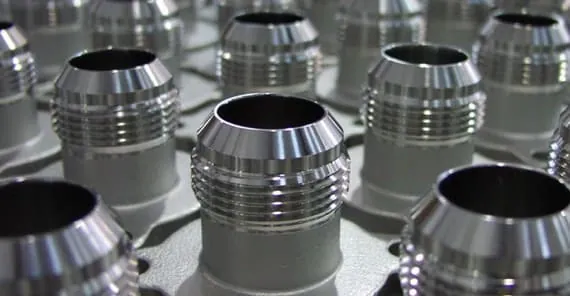
The short answer: Aluminum offers high specific strength, high electrical and thermal conductivity, non-magnetic behavior and natural oxidation resistance, and when a drawing calls for a specific surface finish or a highly reflective surface, it is mechanically polished. Harrison polishes aluminum castings, forgings, machined parts and fabrications to deburred, Ra-specified, mirror and reflector finishes, certifies finishes as low as 4 µin Ra with profilometer readings, and keeps aluminum tooling and abrasives separate from steel so the polished surface is not contaminated.
Why polish aluminum
Surface finish. Reach a maximum Ra on the drawing, from basic deburring of cast and forged parts to ultra-fine finishes for high-purity and vacuum applications.
Reflectivity. Light and heat reflectors, optical housings and decorative hardware are polished to a mirror finish.
Product release and cleanability. Smooth aluminum surfaces hold less product and clean faster on process and packaging equipment.
Appearance. A uniform, lustrous finish on visible components, with or without a subsequent anodize or coating.
Typical aluminum work
Vacuum chamber bodies and flanges, semiconductor and solar process components, reflectors and lighting hardware, heat-exchanger and cold-plate surfaces, process and packaging equipment, aerospace and defense parts, and architectural and marine hardware. Large components are handled in Houston with four overhead cranes and 15,000 lb material-handling capacity.
Aluminum is not electropolished by Harrison's process; where corrosion protection or a hard surface is needed after polishing, the part goes to anodizing or coating. For stainless and nickel alloys, see mechanical polishing and electropolishing.
Request a Quote · Call 800-245-5707
- More to Know
Frequently Asked Questions

Services
Resources
13002 Brittmoore Park Dr
Houston, TX 77041-7231
Phone: 800-245-5707