Electropolishing and Passivation for Nuclear Service
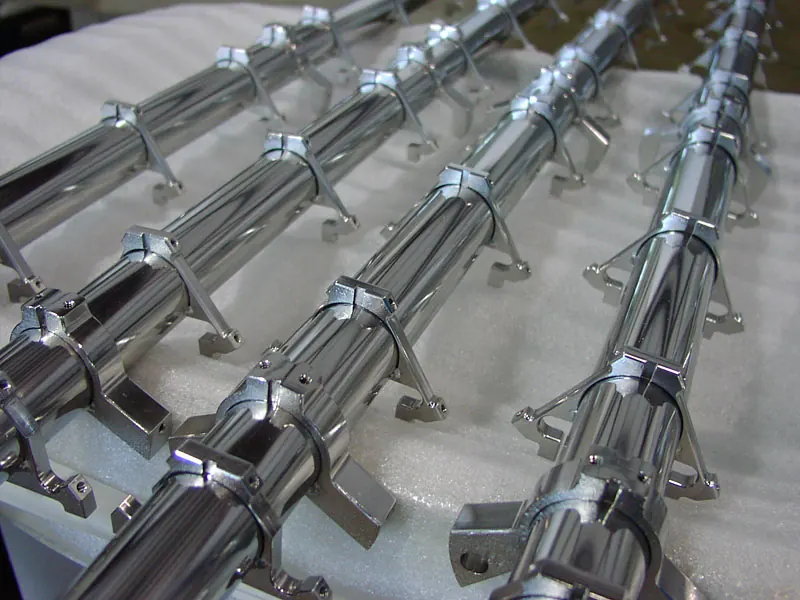
The short answer: In nuclear service a stainless surface has to resist corrosion for decades and, when the time comes, give up contamination easily. Electropolishing does both. It removes the free iron and surface damage that start corrosion, and it leaves a microscopically smooth surface with less total area for radioactive contaminants to lodge in, so decontamination is faster and more complete. Harrison electropolishes and passivates stainless piping, vessels, tanks and components for nuclear applications in Houston and documents every job to the governing specification.
Components we process
Piping, spools and tubing. Interior and exterior electropolishing or passivation after fabrication.
Tanks, vessels and liners. Shop or on-site interior electropolishing to reduce contamination uptake; passivation after repair.
Gloveboxes, hot-cell hardware and handling equipment. Electropolished for cleanability and decontamination.
Valves, fittings and fabricated components. Batch electropolishing and passivation with verification.
Why electropolishing is specified for nuclear work
Corrosion resistance. Electropolishing removes the iron-rich, damaged outer layer left by machining and welding and leaves a chromium-enriched passive surface, so the alloy resists pitting and stress-corrosion initiation through long service.
Reduced contamination uptake. Contaminants lodge in grind marks, weld ripples and the microscopic peaks of an as-fabricated surface. Electropolishing dissolves those features and reduces total surface area, so less activity is retained.
Easier decontamination. A featureless surface releases contamination with less aggressive chemistry and less time, which reduces dose, waste volume and outage duration.
Work is performed to ASTM B912 (electropolishing), ASTM A967 (passivation) and ASTM A380 (cleaning and descaling), or to your specification. Harrison is ISO 9001 and ISO 14001 certified and has electropolished stainless steel since 1980.
Representative project
A fabricator building stainless tanks and piping for a radioactive liquid-handling system needed interior surfaces electropolished to a specified Ra to minimize contamination retention, with full traceability. Harrison electropolished the tank interiors and the piping spools, verified surface roughness and passivation, and delivered Ra readings and certificates of conformance tied to the fabricator's component tags for the owner's quality records. The equipment was accepted without surface-finish exceptions.
Request a nuclear quote
Send drawings or a component list with the alloy, the specification and Ra target, the documentation required, and your delivery date. We quote within one business day; expedited service is available and lead times vary with shop load.
Request a Quote · Call 800-245-5707
- More to Know
Frequently Asked Questions
Services
Resources
13002 Brittmoore Park Dr
Houston, TX 77041-7231
Phone: 800-245-5707