Stainless Steel Pickling Services
The short answer: Pickling removes what passivation cannot: weld scale, heat tint, rust, embedded iron and other oxides that fabrication, heat treatment and service leave on stainless steel and corrosion-resistant alloys. It uses acids strong enough to dissolve the oxide and a thin layer of metal beneath it, leaving a clean, uniform, matte surface ready to passivate. Without it, a welded stainless fabrication will not resist corrosion as designed. Harrison has pickled corrosion-resistant alloys since 1980 to ASTM A380 or your specification, by immersion, circulation or spray, on components of any size, in Houston or at your site.
What pickling removes
Weld scale and heat tint in the heat-affected zone; mill scale and oxides from heat treatment, forming and hot work; rust and corrosion products on equipment in service; embedded iron and abrasive particles from grinding and handling; and heavy contamination that a passivation bath cannot touch. Pickling also removes the chromium-depleted layer beneath heat tint, which is where corrosion would otherwise start.
How we pickle
Immersion. Parts and fabrications that fit the tanks are pickled by immersion for uniform results and full coverage of complex geometry.
Circulation. Piping systems, vessels and heat exchangers are pickled by circulating the solution through them, in the shop or in place.
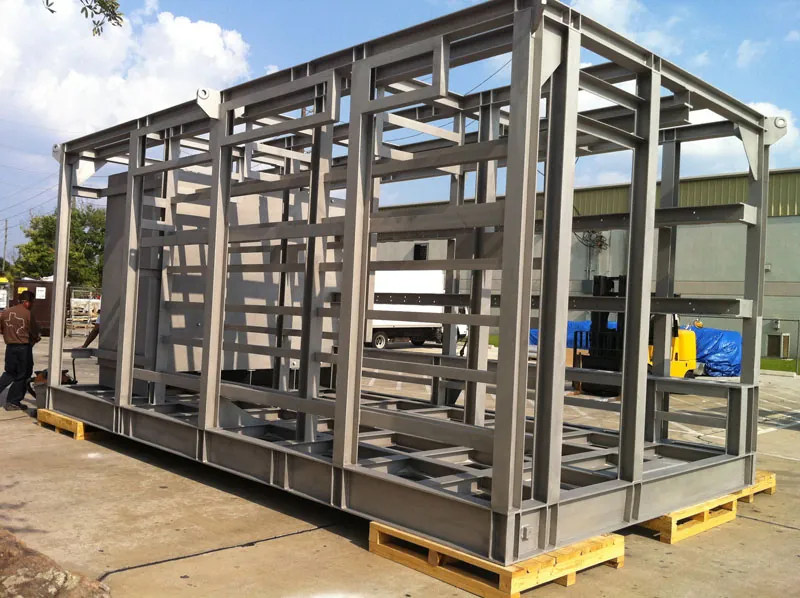
Spray. Large fabrications, structures and installed equipment are pickled by spray application by Harrison field crews.
Every method is controlled for concentration, temperature and time, followed by neutralizing and deionized-water rinsing. Pickling is nearly always followed by passivation to ASTM A967 or AMS 2700 so the cleaned surface re-forms its passive film; see passivation and pickling for how the two fit together.
Materials and typical work
Austenitic, duplex and super duplex stainless steels, 6Mo alloys and nickel alloys. Welded piping and spools, pressure vessels and tanks, skids and structural frames, heat exchangers, hoppers and chutes, and equipment coming out of service for refurbishment. Large fabrications are handled in Houston with four overhead cranes and 15,000 lb material-handling capacity; installed systems are pickled on-site across the Houston area and the Gulf Coast. Common customers are petrochemical, oil and gas and data center liquid-cooling fabricators.
Request a Quote · Call 800-245-5707
- More to Know
Frequently Asked Questions

Services
Resources
13002 Brittmoore Park Dr
Houston, TX 77041-7231
Phone: 800-245-5707