Nickel Alloy Electropolishing
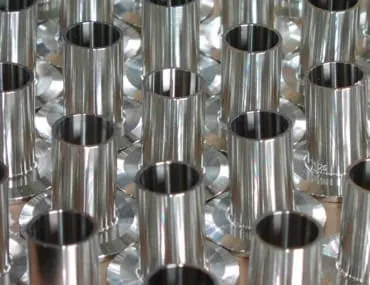
The short answer: Nickel alloys are chosen for corrosion resistance and strength at temperatures where stainless steel gives up, and they lose part of that advantage the moment they are machined, welded or ground. Electropolishing removes the contaminated, work-damaged outer layer and restores the surface the alloy was designed to have, with a lower Ra, no burrs and a bright finish. Harrison has electropolished nickel alloys since 1980 — Hastelloy, Inconel, Monel, Incoloy, commercially pure nickel and the specialty grades — and adjusts the process parameters for each family rather than treating them like stainless.
Why nickel alloys need different handling
Nickel alloys do not all behave alike in an electrolyte. Nickel-chromium-molybdenum grades such as Hastelloy C and Alloy 625, nickel-copper grades such as Monel, nickel-iron grades such as Invar-type and Kovar, and commercially pure nickel each dissolve at different rates and need their own current density, bath chemistry and cycle time. Run on a stainless recipe, a nickel alloy can pit, etch or come out dull. Harrison's experience across the full list below is what produces a bright, uniform result.
Alloys we electropolish
Hastelloy C grades · Inconel 600, 625, 718, X-750 and 800 · Incoloy · Monel 400 and K-500 · Nickel 200, 205, 220 and 270 · Alloy 20 (20Cb-3) · Alloy 625 · Waspaloy · Permalloy and Mu-metal · Nickel-iron Alloy 42 and Kovar · nickel silver.
Hastelloy has its own page: Hastelloy electropolishing. For passivation, mechanical polishing and oxygen cleaning of nickel alloys, see nickel alloys under materials.
What electropolishing does for nickel alloys
Restores corrosion resistance. Removes embedded iron, inclusions and the smeared layer from machining and grinding so the alloy performs as engineered in chloride, acid, sour and high-temperature service.
Removes rouge and oxides. Heat tint and process rouge on nickel-alloy equipment dissolve with the surface layer.
Lowers Ra and deburrs. Peaks and burrs dissolve first, improving surface finish and removing burrs without mechanical contact or distortion.
Reduces product adhesion and improves cleanability. A featureless surface holds less product and cleans faster, which matters on reactor internals, heat-exchanger components and high-purity hardware.
Brightens. A lustrous, non-directional finish on parts that are often otherwise dull from heat treatment.
Typical parts
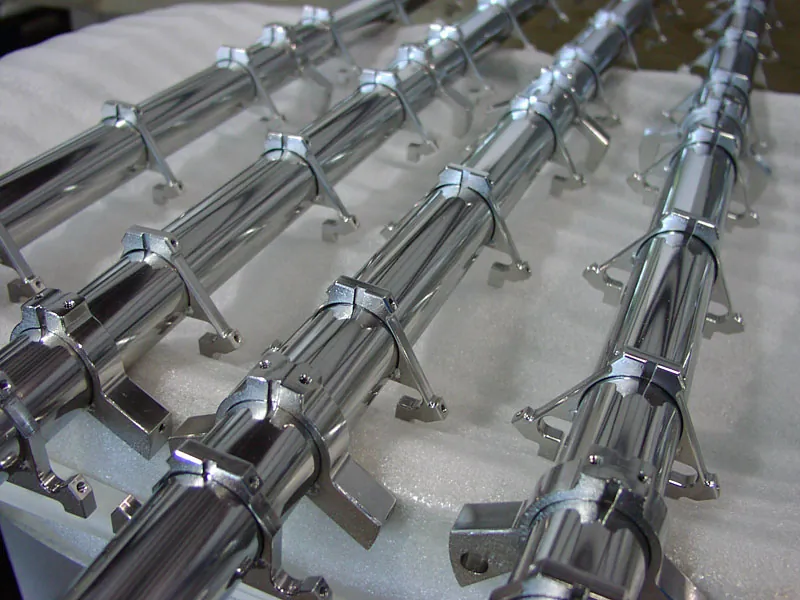
Reactor internals, heat-exchanger components and tube bundles, valve bodies and trim, pump components, aerospace and gas-turbine hardware, chemical-process piping and fittings, and electronic and vacuum components in Kovar and Alloy 42. Harrison's Houston facility handles everything from batch runs of small machined parts to large fabrications with four overhead cranes and 15,000 lb material-handling capacity; Ra readings and a certificate of conformance ship with every job.
Request a Quote · Call 800-245-5707
- More to Know
Frequently Asked Questions

Services
Resources
13002 Brittmoore Park Dr
Houston, TX 77041-7231
Phone: 800-245-5707