
Electropolishing and Passivation for Bioprocess and Biotech Equipment
Reviewed by Tom Harrison, member of the ASME BPE Surface Finish Subcommittee · Updated October 2026
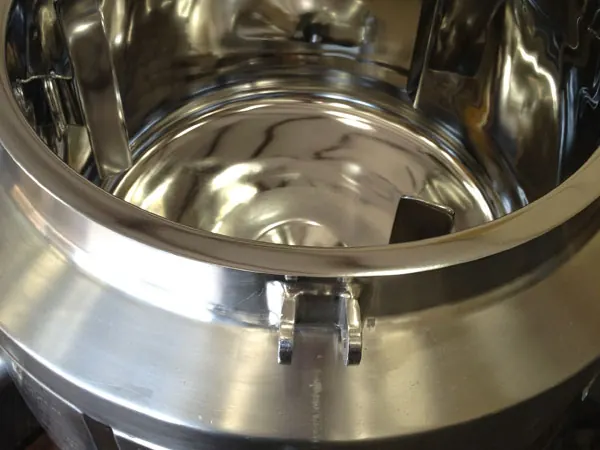
The short answer: Bioprocess equipment lives or dies on cleanability. Cell culture, fermentation and purification systems are specified to ASME BPE surface-finish designations because a lower-Ra, electropolished 316L surface sheds fewer particles, anchors less biofilm and validates faster. Harrison electropolishes and passivates bioreactors, vessels, hygienic tubing and skid components to SF4–SF6, documents the Ra, and ships with a certificate of conformance.
What we finish for biotech customers
Bioreactors and fermenters. Interior mechanical polishing and electropolishing of vessels, jackets excluded, including nozzles, baffles and agitator shafts.
Buffer, media and hold vessels. Finished to the designation on the drawing, with Ra mapped by location.
Hygienic tubing and transfer panels. Orbital-welded 316L spools, manifolds and transfer panels electropolished per ASTM B912 or passivated per ASTM A967 before installation.
Skid-mounted systems and stainless hardware on single-use platforms. Stainless totes, frames and connection hardware around single-use assemblies are passivated or electropolished so they do not become the contamination source in an otherwise disposable train.
ASME BPE surface finish, in brief
| Designation | Finish | Ra max (µin) | Ra max (µm) |
|---|---|---|---|
| SF1 | Mechanically polished | 20 | 0.51 |
| SF2 | Mechanically polished | 25 | 0.64 |
| SF3 | Mechanically polished | 30 | 0.76 |
| SF4 | Mechanically polished + electropolished | 15 | 0.38 |
| SF5 | Mechanically polished + electropolished | 20 | 0.51 |
| SF6 | Mechanically polished + electropolished | 25 | 0.64 |
Tom Harrison, our founder, serves on the ASME BPE Surface Finish Subcommittee that maintains these designations and has served on the board of ISPE. If a drawing calls out a finish by old "grit" language instead of a designation, we will help translate it before quoting. More in what is ASME BPE and Ra vs RMS.
Why electropolishing is the biotech standard
Electropolishing dissolves the microscopic peaks left by mechanical polishing and leaves a chromium-enriched, featureless surface. For a bioprocess train that means less product and protein adhesion, faster CIP with less chemistry, fewer sites for biofilm, and a surface that stays passive through repeated SIP cycles. It is also non-particulating, which matters downstream of filtration.
Representative project
A biologics contract manufacturer commissioning a new upstream suite needed a set of 316L bioreactors, media-prep vessels and the connecting hygienic tubing finished to SF4 and documented for its validation package. Harrison mechanically polished and electropolished the vessel interiors, electropolished the tubing and transfer-panel components in batches, passivated and verified each item, and delivered profilometer Ra readings keyed to the vessel drawings with a certificate of conformance. Validation proceeded without surface-finish findings.
Request a biotech quote
Send drawings or a component list with the alloy, the ASME BPE designation or Ra target, and your delivery date. We quote within one business day; expedited service is available and lead times vary with shop load.
Request a Quote · Call 800-245-5707
- More to Know
Frequently Asked Questions

Services
Resources
13002 Brittmoore Park Dr
Houston, TX 77041-7231
Phone: 800-245-5707