Electropolishing, Passivation and Pickling for Oil and Gas Equipment
The short answer: Corrosion-resistant alloys only perform as engineered if the surface is restored after fabrication. Machining, welding, heat treating, grinding and handling leave free iron, heat tint and embedded contaminants that start pitting and crevice corrosion in sour, chloride and seawater service. Harrison pickles, passivates and electropolishes stainless, duplex, super duplex and nickel-alloy components in Houston — and on-site for hardware that cannot ship — so the alloy you paid for behaves like that alloy in the field.
Components we process
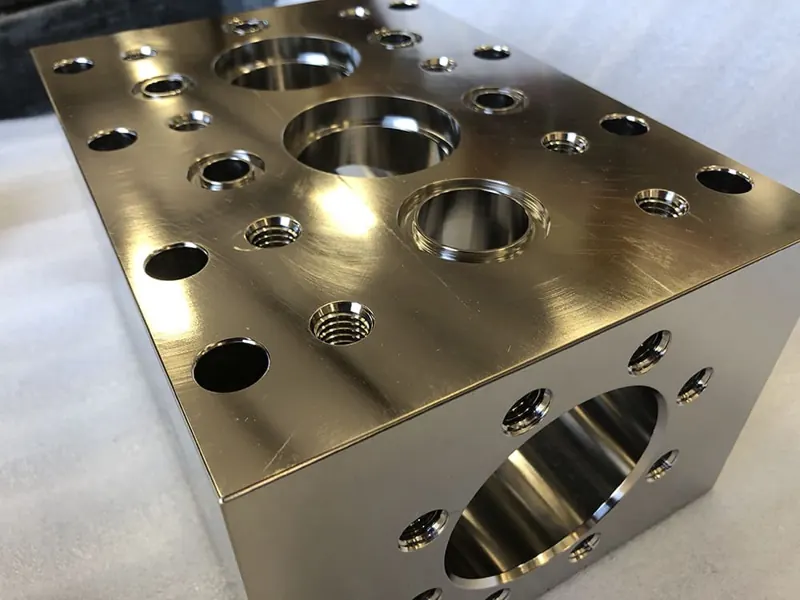
Manifolds, tubing and instrumentation lines. Electropolished or passivated internally and externally; small-bore tubing in bundles.
Pressure vessels, separators and surge hoppers. Pickled and passivated after welding to remove heat tint and restore the passive layer; interior electropolishing where product adhesion or cleanability is a concern.
Subsea and wellhead hardware. Duplex, super duplex and nickel-alloy components passivated and verified before coating or assembly.
Pipeline components, valves and fittings. Batch passivation with documented verification.
Turbine and rotating-equipment parts. Electropolishing to reduce surface roughness and remove the embedded iron left by machining.
Which process your component needs
Pickling (ASTM A380) removes weld scale, heat tint and embedded iron with an acid that attacks the surface. It is the first step on any welded fabrication. Passivation (ASTM A967) removes free iron and allows the chromium-oxide layer to re-form without changing the surface texture; it is the minimum for any stainless or CRA component after fabrication. Electropolishing (ASTM B912) removes a controlled layer of metal, lowering Ra, deburring and leaving a chromium-enriched surface with the best corrosion resistance of the three. See electropolishing vs passivation.
Harrison also offers mechanical polishing and the Harrison C-75 process for surfaces where product adhesion, not corrosion, is the driver.
Capacity and field service
The Houston facility runs four overhead cranes with 15,000 lb material-handling capacity, so skids, vessels and large manifolds are handled without breaking them down. Equipment that is installed or too large to transport is pickled and passivated on-site by Harrison field crews throughout the Houston area and the Gulf Coast. We are ISO 9001 and ISO 14001 certified and have served the oil and gas industry since 1980.
Representative project
An equipment fabricator building super duplex manifolds and instrumentation tubing for an offshore production platform needed every wetted surface pickled and passivated after welding, verified, and documented for the operator's quality file before coating. Harrison processed the manifolds in the shop and the tubing in bundles, verified passivation on each lot, and delivered certificates of conformance tied to the fabricator's heat and tag numbers. The hardware passed the operator's receiving inspection with no surface findings.
Request an oil and gas quote
Tell us the alloy, the component and dimensions, the specification (ASTM A380, A967, B912 or the operator's spec), and whether the work is in the shop or in the field. We quote within one business day; expedited service is available and lead times vary with shop load.
Request a Quote · Call 800-245-5707
- More to Know
Frequently Asked Questions

Services
Resources
13002 Brittmoore Park Dr
Houston, TX 77041-7231
Phone: 800-245-5707